Skip to content
Plumber on call — picking up now Average response under 60 min in Brentwood 01277 676065 — tap to call

What is a CP12?

“CP12” is the everyday name for the Landlord Gas Safety Record — the document that proves the gas appliances, flues and pipework in a let property have been checked and are safe to use. The name is a hangover from an old British Gas form code; the legal term you will see on the paperwork today is the Landlord Gas Safety Record, but most letting agents, insurers and tenants still call it the CP12 or simply “the gas certificate.”

It is not optional. The legal basis is the Gas Safety (Installation and Use) Regulations 1998, as amended — including the important 2018 amendment that changed how renewal dates work (more on that below). The duty sits squarely with the landlord, not the tenant and not, by default, the letting agent — though you can ask an agent to manage it on your behalf in writing.

Crucially, the check can only be carried out by a Gas Safe registered engineer. The Gas Safe Register replaced CORGI in 2009 as the official body for gas safety in Great Britain. Anyone working on gas in a rental must be on it, and you can verify any engineer's registration online before they start.
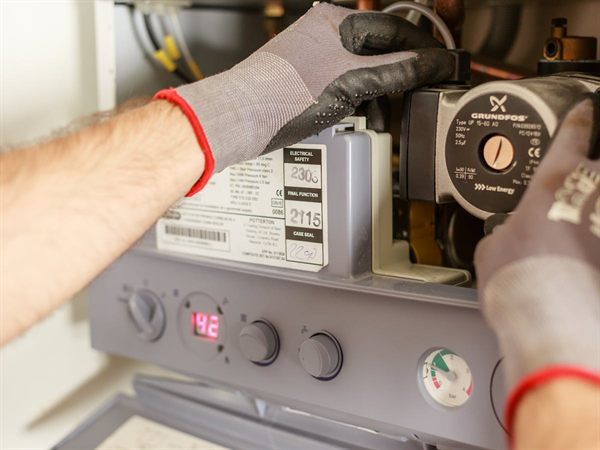
Gas Safe registered engineer carrying out a landlord gas safety check on a boiler in a Brentwood rental property

The rules at a glance

If you read nothing else, these are the headline obligations every landlord with gas in a let property needs to know.

Frequency
A safety check at least every 12 months — no more than 12 months between checks — on each gas appliance and flue the landlord is responsible for.
Who needs one
Landlords of rented residential property: houses, flats, HMOs, rooms in shared houses, and holiday lets.
Who can do it
Only a Gas Safe registered engineer — no one else may legally carry out the check.
Tenant copy
Existing tenants: within 28 days of the check. New tenants: a copy before they move in.
Record retention
Keep the record for at least 2 years.
Governing law
Gas Safety (Installation and Use) Regulations 1998, as amended (2018).
Enforced by
The Health and Safety Executive (HSE).

Who needs a CP12?

The duty applies to almost all rented residential accommodation where there is a gas appliance, fitting or flue the landlord owns or is responsible for. That includes:

  • Houses and flats let on assured shorthold and other residential tenancies
  • Houses in Multiple Occupation (HMOs) and individual rooms in shared houses
  • Holiday lets and short-term rented accommodation
  • Bedsits, and rooms let within a larger building

A tenant's own gas appliance — one they brought with them and that the landlord is not responsible for — sits outside the annual check, though the connecting installation and any landlord-owned flue serving it may still fall within your duty. If you have inherited a let property, taken over a portfolio, or are simply not sure where the last record is, the safe assumption is that a check is due. A valid, in-date record is routinely requested by letting agents, mortgage lenders, insurers and the courts.

What the engineer inspects

The check is more than a glance at the boiler. A Gas Safe registered engineer examines, for each relevant appliance and flue:

  • Each gas appliance the landlord owns — boiler, fire, hob, cooker — checked that it is burning correctly and operating at the right pressure
  • The flue or chimney, to confirm combustion products are venting safely to the outside
  • Adequate ventilation and air supply for each appliance to burn safely
  • A tightness test on the gas pipework to confirm there are no leaks
  • That safety devices and controls are working as they should

The record itself must describe and locate each appliance and flue checked, name the registered engineer and give the check date, the property and landlord details, and note any safety-related defect found together with the remedial action taken. A gas safety check is a safety inspection — it is not the same as a full service, although a good engineer will flag anything that needs attention.

The 2018 “MOT-style” renewal window

One of the most useful changes for landlords came in with the 2018 amendment to the regulations. Before it, booking your check early effectively reset the clock and shortened your annual cycle. Now the rules work more like an MOT.

You can have the check carried out up to two months before the current record's expiry date without losing the original renewal date. Do the check in that two-month window and the new record keeps the same anniversary date as if you had waited until the last day. In practice this means you can line the check up with a tenancy changeover, an existing maintenance visit, or simply a convenient slot, rather than scrambling on the exact deadline — and your annual cycle never drifts earlier and earlier each year.

One retention nuance follows from this: if you use the early-check flexibility, keep the records until two further checks have been carried out, so the audit trail of dates stays intact.

Giving the tenant their copy

Carrying out the check is only half the duty — you must also get the record into your tenant's hands on time:

Existing tenants
A copy within 28 days of the check being completed.
New tenants
A copy before they move in.
Format
Electronic copies are acceptable if the tenant agrees, but you must provide a paper copy on request.
Your own copy
Keep the record for at least 2 years (longer if you used the early-check window).

Records may be kept digitally provided they are secure from loss or tampering and can be printed when needed. Getting the tenant copy out promptly also matters for possession: in England, an up-to-date gas safety record provided to the tenant is one of the prerequisites for a valid Section 21 notice, so a gap in your paperwork can have knock-on consequences well beyond the gas itself.

Enforcement — what's really at stake

Gas safety duties are enforced by the Health and Safety Executive (HSE). Failing to comply is a criminal matter: it can lead to enforcement action, fines and, in serious cases, prosecution and imprisonment. The penalties scale with the seriousness of the breach, so it is not worth gambling on getting away with it.

Beyond the legal sanction, a missing or out-of-date record commonly invalidates landlord insurance, can block a Section 21 possession claim, and will be flagged by any competent letting agent or managing agent before they take a property on. But the reason the duty exists at all is the one that matters most: faulty gas appliances and blocked flues cause carbon monoxide poisoning, fires and explosions. Carbon monoxide is colourless and odourless — the annual check, alongside working CO alarms, is the front line of protecting the people living in your property.

A note for Brentwood & commuter-belt landlords

Brentwood and the surrounding Essex towns are a strong lettings market, and the Elizabeth Line out of Brentwood and Shenfield stations has only sharpened demand — central London is a short hop, which keeps commuting tenants competing for flats and family homes alike. That translates into a lot of let property changing hands and a steady churn of tenancies that need the gas paperwork squared away between occupants.

We see the full range across the area: buy-to-let flats clustered around the stations, HMOs split into rooms close to the transport links, and Victorian and Edwardian conversions around the older parts of town with flues and pipework that warrant a careful eye. The practical landlord move is to use the two-month early window to schedule each CP12 around a tenancy changeover, so you are never racing a deadline and the new tenant gets their copy before they pick up the keys.

How to book a CP12 with us

01

Call with the details

Tell us the property address, the gas appliances present and how we get access. We give you a fixed price up front — no call-out fee in our coverage area — and book a slot, ideally inside the two-month early window so your renewal date stays put.

02

We attend & test

A Gas Safe registered engineer inspects each appliance, flue and the ventilation, and runs a tightness test on the pipework. If anything fails we tell you straight away and explain what needs doing.

03

Record issued

You receive the Landlord Gas Safety Record promptly — ready to pass to your tenant within 28 days, or to a new tenant before move-in. Keep your copy for at least two years.

Ready to book? See our landlord gas safety certificate (CP12) service in Brentwood, or read more about our Gas Safe registered engineer work across the area.

Landlord CP12 questions

How often do I legally need a CP12?

At least once every 12 months. Each gas appliance and flue the landlord is responsible for must be checked at intervals of no more than 12 months. Thanks to the 2018 amendment you can book the check up to two months before the current record expires without losing your original renewal date.

Who is allowed to issue a CP12?

Only a Gas Safe registered engineer. The Gas Safe Register is the official register for gas safety in Great Britain, replacing CORGI in 2009. You can verify any engineer's registration on the Gas Safe Register before they carry out the work.

What is the difference between a CP12 and a boiler service?

A CP12 (Landlord Gas Safety Record) is a legally required safety check covering each gas appliance, flue, ventilation and the pipework tightness. A service is a more thorough maintenance procedure on a single appliance to keep it running efficiently. They are different jobs — though we can often carry out both in one visit.

When does my tenant need a copy?

Existing tenants must receive a copy within 28 days of the check being completed. New tenants must be given a copy before they move in. An electronic copy is fine if the tenant agrees, but you must supply a paper copy on request. You must keep your own copy for at least two years.

What happens if an appliance fails the check?

If an appliance is unsafe, the engineer explains the fault and, with your permission, may turn it off and label it so it is not used until repaired. The defect and any action taken is recorded on the document. We'll quote the repair so you can make the appliance safe and get the property back into a compliant state quickly.

My tenant won't give access — what do I do?

You still have a duty to take all reasonable steps to complete the check. Keep a clear, dated record of every attempt — letters, calls and proposed appointment times. That documentation shows you took the duty seriously if your compliance is ever questioned. We'll work with you and the tenant to find a workable time.

What are the penalties for not having one?

Gas safety duties are enforced by the Health and Safety Executive. Non-compliance is a criminal offence that can lead to enforcement action, fines and, in serious cases, prosecution and imprisonment, with penalties scaled to the seriousness of the breach. A missing or invalid record can also invalidate your landlord insurance and block a Section 21 possession claim — but the real reason the duty exists is your tenants' safety.

Stay compliant, keep tenants safe.

Book your landlord CP12 today.

Single flat or a full portfolio across Brentwood and Essex — a Gas Safe registered engineer, a fixed price with no call-out fee in our coverage area, and a record you can hand straight to your tenant.

Call 01277 676065